|
|
|
|
Original Article
RESEARCH AND TRACKING OF STRAY DOGS USING IOT AND RFID TECHNOLOGY
|
C. Sanjeev
Kannan 1, Sundar Santhoshkumar 2* 1 Project Fellow,
Department of Computer Science, Alagappa University, Karaikudi, Tamil Nadu,
India 2 Assistant Professor, Department of Computer
Science, Alagappa University, Karaikudi, Tamil Nadu, India |
|
|
|
ABSTRACT |
||
|
Stray dog overpopulation has become an increasingly urgent concern, especially in densely populated urban centers as well as in less regulated rural areas. If left unchecked, the proliferation of stray dog populations can result in a whole range of problems, from dog bite cases to the spread of zoonotic diseases like rabies, and even damage to local ecosystems, apart from concerns about animal cruelty and neglect. While many government and non-government organizations are working tirelessly to address these problems through sterilization, vaccination, and rescue efforts, their efforts are often piecemeal and reactive. One of the key areas where there is a clear gap is the lack of a technology-driven platform that allows for real-time reporting, tracking, and monitoring of stray dog populations. This lack of a structured approach results in wasteful efforts and missed opportunities for intervention. It is in this context that the current project seeks to address the need for a comprehensive and technology-driven solution that leverages a web-based interface, real-time GPS tracking, and RFID-based identification to better manage stray dog populations. With this approach, it becomes possible not only to address citizen reports more effectively but also to tap into a rich source of data that can be used for planning interventions that are preventive and welfare-oriented. Keywords: IoT-Based Monitoring, RFID, GPS
Tracking, Real-Time Reporting, Urban Stray Management |
||
INTRODUCTION
Stray dogs are
likely to suffer from adverse conditions including hunger, injuries, bad
weather conditions, infections, and these conditions not only affect the dogs,
but also present a serious risk to public health and safety. Their presence can
result in traffic accidents, the spread of zoonotic diseases like rabies, at
the same time violent reactions brought on by hunger or fear in town and
cities. If these issues do not get solved, they might become a significant the
public’s worry that calls for cooperation between the public and government
officials. mainly to the lack of a digital platform, traditional methods like a
manual reporting, physical capture, and offline adoption campaigns are
typically inefficient, unpredictable and difficult to scale. Essential
information like the location, health, or rescue status of the dogs is not
normally available and retrievable, which affects decision-making and further
actions.
The goal of this
research project is to offer an effective and technologically advanced solution
to these problems. A digital platform designed with the Django web framework
and integrated with RFID and GPS technology will be used to classify the pulse
rate using the Random Forest machine learning algorithm. This digital platform
will help effective and scalable management of stray dogs monitoring. And these
allowing users to report dog sightings, indicate interest in adoption, and help
with tracking the location and identity of dogs using sensor-based systems.
These Additionally help with, the digital platform allows administrators to
monitor trends such as stray dog hotspots, locations that are frequently
reported, and the history of animals that have been tagged. Such real-time data
analysis can greatly improve rescue efforts, streamline immunization and
sterilization programs.
Real time data
monitoring is like this can enhance rescue missions, findings sterilization and
vaccination programs, and help in animal welfare plans. Also, the system is
built to send alerts for critical situations involving dogs that are hurt or
unresponsive, guaranteeing that rescue teams respond quickly. By disseminating
information about adoption events, vaccinations, and responsible pet ownership
practices, it raises public awareness. The platform supports transparent
operations and active citizen participation through mobile accessibility and
secure data management. In order to achieve humane, effective, and sustainable
stray dog manage in urban areas, this project imagines a cooperative and
include ecosystem where communities, NGOs, veterinary professionals, and local
authorities empowered by smart technologies collaborate.
REVIEW OF RELATED LITERATURE
Jena et al. (2025) Free-roaming dogs are a better preventing
rabies strategy, based on an analysis of the terminology, and it's used for
unrestricted dogs. The research claims
that the frequent use of derogatory language leads to harmful actions like
removing instead of sensitive management. The authors pointed out that the best
ways to control dog populations and the spread of rabies are mass vaccination
(70% coverage) and sterilization. Thus, speaking with understanding can increase
public awareness and support long-term efforts to prevent rabies. Jena et al. (2025).
Hussain
et al. (2022) developed a wearable device system to
observe the health of COVID-19 patients using physiological data. The system
collected data such a body temperature, pulse rate, blood pressure, and oxygen
levels for real-time monitoring. A Random Forest classifier used to analyze the sensor data in order to find the level of
infection or goodness of the patients. The 99.26% accuracy of the proposed
model indicate the value of AI-based wearable monitoring for remote healthcare
management Hussain
et al. (2022).
Peng
He (2023) highlights the most
major compromises within sampling extent, duration, and rate and offers a
thorough guide for designing GPS studies of animal social behavior.
The article points out, how important this design factors are to data quality
and behavioral conclusion accuracy Peng He (2023).
Emanuel
Pereira (2023) mixed patent
analysis from 2009 to 2023 with scientific literature to perform a
comprehensive analysis of the use of RFID technology in animal tracking. The
article points out the use of passive UHF RFID tags for animals tracking as the
main application because of their affordability. The application of RFID
technology in conjunction with other technologies such as GPS and cameras is
also highlighted for enhancing tracking systems Emanuel
Pereira (2023).
Dickson
Tayebwa (2022) examined into the
effects of rabid dog attacks on Central Ugandan peoples. According to the
study, two rabid roaming dogs attacked 18 domestic animals and 29 people, with
children making up the majority of the victims. There are gaps in knowledge and
access to healthcare, as evidenced by the fact that many victims first sought
treatment from traditional healers rather than medical facilities. In order to
lower the number of rabies cases, the authors stressed the importance of better
healthcare access, public education, and roaming dog control Dickson Tayebwa (2022).
Fatma
Nur Yasar (2021) concentrate on
an IoT-based feeding system to give a remedy for malnutrition in stray animals
through systematic and reliable food distribution. The proposed system
integrates weight sensors, Arduino controllers, and LPWAN (LoRa) technology for
real-time monitoring of food stocks and data transfer. A friendly interface
using Blynk allows volunteers and managers to track feeding points and
advantages for stray animals. A pilot implementation in Kadıköy
(119 private vets), Istanbul, confirms the practicability of the system with
cost evaluation and scalability Fatma Nur Yasar (2021).
Alfin
Fernandha Pratama (2021) Though existing studies are based on
scheduled feeding and monitoring, they do not have a specific system for
outdoor stray cat care. Studies involving image recognition or PIR sensors
concentrate on detection rather than real-time health and feeding monitoring.
Most studies reviewed disregard the combination of feeding, watering, and real
time outdoor monitoring. This study bridges the gap by proposing an IoT-capable
system with image processing, smartphone operation, and real-time stray cat
condition monitoring Alfin Fernandha
Pratama (2021).
Todorov
and Stoinov (2020) developed an IoT-based farm management
system to automate animal monitoring, reducing human involvement and increasing
productivity. The system uses the ESP8266 Wi-Fi module for wireless data
transfer and an expert system for analysing animal health factors like milk
quality and somatic cell count. To provide secure data transfer, the system
applies MD5 and SHA1 hashing for authentication and integrity checks. A
high-level protocol on HTTP is designed to overcome the limitations of
resource-constrained devices Todorov
and Stoinov (2020).
PROPOSED METHOD
The system worked
on ESP32-based device with RFID, GPS, and a pulse sensor to identify, locate,
and monitor stray dogs. User via reports is managed by admin, enabling quick
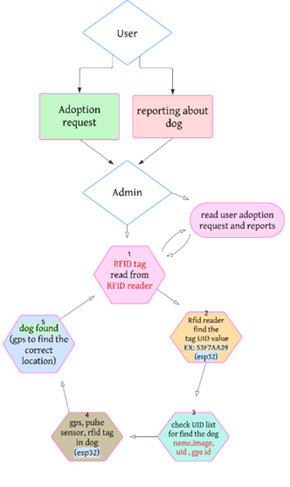
rescue, health condition, and adoption Figure 1. And the hardware part of the system
includes ESP32 microcontroller, RFID Reader (MFRC522), RFID tags (attached to
dogs), Pulse sensor (measure pulse rate) and Wi-Fi module (data transmission).
The software
system used Django web application, database for storing dog records. This
system's user-friendly and designed web interface for reporting and adoption
greatly improves community involvement in the welfare of stray dogs. By
providing important details like their name, mobile number, the location of the
incident, the time, and the reason, citizens can easily report dogs that are
hurt, lost, or dead. This makes it possible for the relevant authorities to
react to the incident quickly and give priority to those who require immediate
attention. A report about a dead dog beneath a parked car on campus, for
example, show how accurate user input is crucial for efficient case
verification and response. Additionally, the system allows adoption requests,
which offer user details and dog profiles, encouraging a clear and
well-organized procedure for shelters. The system allows adoption requests,
user information and dog profiles, in general, the system promotes
accountability, timeliness, and public and animal welfare authorities’
collaboration. And then used to classify the Random Forest algorithm to find
pulse rate values into different health conditions. The dataset contains pulse
values and activity status, which are used as input features. The model is
trained using labelled data and then used to predict the health condition of
dogs.
The health
conditions are categorized in Normal, Low Abnormal, High Abnormal, Very High
Abnormal, No Pulse. The proposed Internet of Things system was successfully
developed and implemented using a combination of RFID, GPS, and physiological
data sensing technologies to classify pulse readings and track and monitor
stray dogs.
The Report Form
module allows citizens to take an active role in the rescue of stray dogs in
distress. The module has a friendly interface where users can report, provide
the location, and point it out on the map. There is also a description box
where the user can enter information regarding the status or actions of the
dog. To help in easier identification, the user can enter pictures of the dog
and the surrounding area, such as landmarks and shops. These help the rescue
teams in finding and understanding the situation. The form utilizes all of the
data including location, images, and descriptions is saved in the backend for
later processing. this form providing their name, mobile number, and adoption
reason, anyone can apply for the adoption of a stray dog using the Adoption
Form module. This helps organizations in understanding the applicant's goals.
For safe data processing, the form uses secure server side
techniques like CSRF.
This information
is store and working by the admin based action, such
as interviews and home visits. This module helps in proper and efficient pet
adoption.
|
Figure 1
|
|
Figure 1 Framework for Stray Dogs Management |
The admin
interface is a significant component of the system and is utilized for the
management and processing of user-submitted data from both the Report Form and
Adoption Form modules. Through the Report Form, citizens are able to take an
active role in the rescue of stray dogs by submitting information such as the
location of the dog, which is shown through an interactive map, information
about the dog’s condition, and images of the dog and the surrounding landmarks.
These submissions are safely stored in the backend and are accessible by the
admin for further review and action. The Adoption Form module is utilized for
the collection of necessary information such as the name, contact details, and
reason for adoption, which enables the admin to make a
determination of eligibility for pet adoption. All submissions are
safely processed through server-side security and are accessible for further
action or follow-through, such as rescue operations or adoption interviews.
The first process
of the rescue and identification system begins when the RFID reader scans the
RFID tag on the stray dog. The RFID tag contains a Unique Identifier (UID) that
represents the digital identity of the dog. The RFID reader is wireless, allowing
it to scan the tag without direct contact. This provides a non-invasive and
efficient way of identifying dogs in the field. As the dog draws near, the RFID
reader scans the tag and transmits the UID to the ESP32 microcontroller
connected to the reader. This process is usually practiced in rescue zones,
shelters, or when visiting the field. Every dog has a specific identification
in the rescue, medical, and adoption process to the use of RFID technology.
This communication device, the ESP32 microcontroller uses Wi-Fi to send the UID
to the server. This technology provides an automated procedure that removes the
capacity for human error in the identification process. The information flow
from the devices to the admin panel and start at this point. To guarantee long
term performance, the RFID tag is attached to a collar. It only takes a few
seconds. to scan. This makes it perfect for manage and large scale of stray
dogs. As soon as the RFID tag is scanned, admin are
immediately informed.
The reader reads
the UID and transmits the data to the ESP32 module after the RFID tag
successfully scanned. The dog database is uniquely identified by its UID based
verified, this is a hexadecimal value like 53F7AA29. The UID provides the main
focus for gathering all data connected to a specific dog. The ESP32 uses a
secure HTTP or MQTT connection to send the UID to the admin backend. immediate
updates on the admin panel are made possible by this real-time process. the UID
helps the system identify multiple dogs and prevents confusion. This correct
UID is only transmitted, and so there is no possibility of data mismatch or
duplication.
This UID is
connected to various pieces of information to get a dog details such as health
information, GPS coordinates, gender details, and dog images. Once the UID is
received, the backend starts a process to acquire the related information. The
integrated process helps the rescue to be accurate and fast. The data
transaction is made a secure, server protection and encryption techniques. The
UID is a key it is used to unlocks the
whole dog profile on the admin panel. Admins do not have to remember any information—everything
is automatically extracted using the UID.
Once the UID is
extract from ESP32, and then the admin panel automatically search and verify
the dog database for a corresponding entry. Every UID is linked to the whole
dog profile, which includes the dog’s name, dog image, UID number, GPS tracking
number, and dog gender and breed. The database it’s a always updated as dogs are identified and
registered. Once a corresponding entry is extracted, all the information is displayed on the admin panel
in a friendly interface. The image is a visual representation of the dog’s
identity, which is very important for distinguishing similar dogs Figure 2. The GPS ID helps the system to identify the
current position of the dog in the next step. The retrieval of information in
real time ensures efficient processing and avoids time wastage in the
verification of information by hand. If the UID is not traced in any record,
the system traces it for analysis or registration.
|
Figure 2
|
|
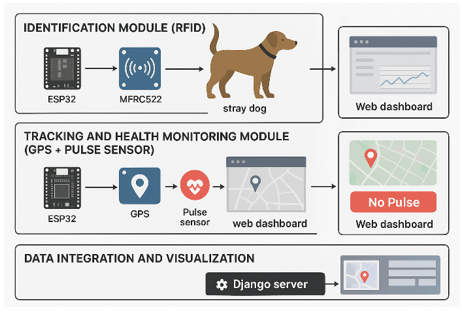
Figure 2 Visual Representation of Stray Dogs
Management |
The admin has the
provision to manually update or verify the information if needed. This is an
important step in ensuring that the RFID tag is linked to a known dog and
avoids any mistake in rescue or adoption. This information is secure from
unauthorized access using an authentication method. The admin can also track
the previous offer and rescue history of the dog related information available.
This centralized information is a process to make the system reliable and
responsible. The system also allows the export of reports and creation of a
digital record for the rescued dogs. This is an very
important feature for connecting and authenticating the information related to
the dog before initiating the rescue operation.
Once the dog’s UID
and GPS ID have been verified, the next step of the process is to identify the
location of the dog using GPS coordinates. The GPS feature of the system is
integrated into the dog’s wearable device or gadget, which continuously sends
the location information of the dog to the backend system. The location
information is updated in real-time interactive map for the admins on the
dashboard. The admins can also track the exact location where the dog is at any
given point in time, which helps in facilitating quicker rescue operations. If
the dog is in motion, the admins can track the live location information
reflected as an interactive map. the GPS system tracks the vital signs of the
dog using an pulse sensor attached to the dog.
The sensor is
always on to predict the heartbeat of the dog and is transmitting this
information along with the GPS. If the heartbeat is detected as irregular or
absent, a health alert will automatically be sent to the admin dashboard. This
will not only help in locating the dog but will also inform us about the health
status of the dog even before we reach the destination. This is a smarter
system due to the integration of GPS, RFID, and heartbeat sensors. These alerts
will be visible on the dashboard, and this information will immediately be sent
to the rescue team. These points on the map will show images uploaded by the
user in the past and will also show landmarks for better understanding.
The admin will
also be able to view the timestamp for GPS and pulse information for
verification. Once the location of the dog is established and scanned, the
admin will be able to update this status as “Dog Rescued.” This is important
for completing the entire process. Finally, the combination of GPS tracking and
pulse detection to makes the rescue process, more efficient and effective for
dogs.
ANALYSIS AND INTERPRETATION OF DATA
The two major
components of the hardware design included an RFID scanner for identification
purposes and a GPS module and pulse sensor for location and health-related
purposes. The ESP32 microcontrollers, which acted as the primary data
acquisition and communication tool, were connected to both modules. The
collected data was then sent in real-time to a web dashboard and REST API
developed using Django because of the ESP32's in-built Wi-Fi capabilities. In
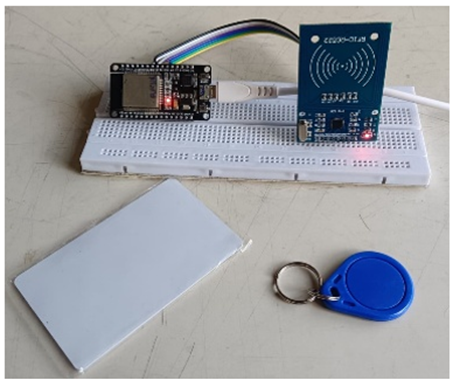
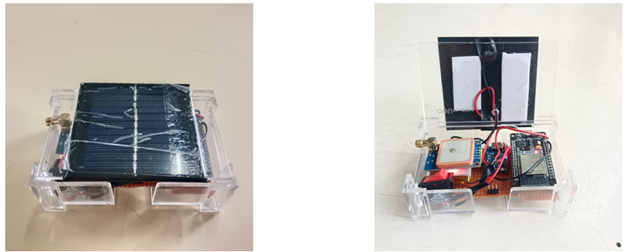
the RFID system shown in Figure 3, the ESP32 was connected to the MFRC522 RFID
reader module using jumper wires on a breadboard.
|
Figure 3
|
|
Figure 3 RFID Setup Using the ESP32 and MFRC522
Module |
The second one
major component of the system was allocate for
location monitoring. The GPS and pulse sensor are connected to another ESP32
board in Figure 5. While the pulse sensor measured the heart
rate of the dogs, the GPS module continuously transmitted location information
(latitude and longitude) values.
|
Figure 4
|
|
Figure 4 GPS and Pulse
Sensor Module Connected to ESP32 (kit) |
The proposed
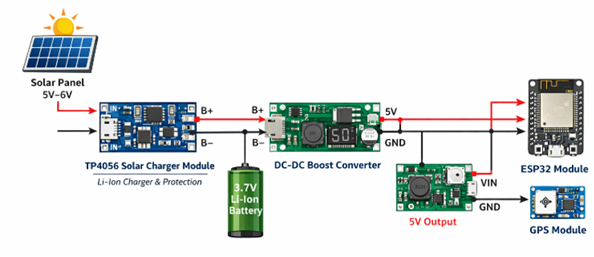
system utilizes a solar-assisted lithium-ion energy management architecture
that would sustain a stable autonomous power supply to power up the ESP32
microcontroller. The architecture is suitable for low-power IoT applications
that operate outdoors.
Figure 5
|
Figure 5 RFID Setup using the ESP32 and MFRC522
Module |
A photovoltaic
module rated for 5 to 6 volts is the prime energy harvesting device. The output
of the PV is fed into the input terminals of the TP4056 lithium-ion charging
controller. The TP4056 controller regulates the charging of the lithium-ion
battery through a constant current and constant voltage charging technique.
This provides the added advantage of protecting the battery from overcharge and
over-discharge situations.
The energy storage
is provided by a single-cell 3.7V Li-ion battery connected between the
terminals (B+ and B-) of the charging module. The use of a battery is crucial
in ensuring continuous operation of the IoT node irrespective of inadequate
solar irradiance, e.g., under nighttime. This is essential to sustain operation
in realistic outdoor conditions.
In order to match
the regulated supply requirement for the load, the battery voltage is converted
to a higher voltage using a DC-to-DC boost converter. This converter boosts the
variable battery voltage from 3.0 to 4.2 V to a regulated 5-V supply. This regulated
voltage supply is connected to the VIN pin of the ESP32 module and the VCC
input of the GPS module to ensure their operation in spite of the variable
battery voltage.
The collected
dataset consists of pulse rate values and activity levels of dogs. The data was
reprocessed and divided into training and testing sets to evaluate the
performance of the machine learning model. The Random Forest classifier was
trained using the dataset and tested using unseen data. Performance evaluation
metrics such as accuracy, precision, recall, and F1-score were used to measure
the effectiveness of the model. From the classification results, it was
observed that the model performed well in identifying the different health
conditions. Most of the classes such as Normal, Low Abnormal, and High Abnormal
achieved high accuracy scores.
Overall, the
integration of solar energy harvesting, protected lithium-ion storage, and high
efficiency DC-DC conversion enables a self-sustaining power solution for IoT
products, which can be implemented for long-term maintenance-free operation.
Such a system architecture enhances both system reliability and autonomy, with
reliable operation throughout a range of environmental conditions.
RESEARCH FINDINGS
First, simulate
practical applications, in which each stray dog would be tagged with a collar
containing the tag, the system was tested using multiple RFID tags. The UID was
immediately readable and sent to the server upon bringing the tag close to the
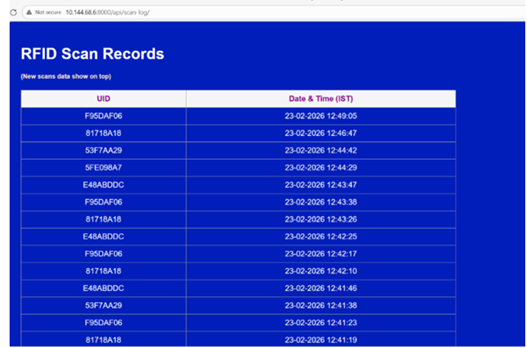
reader. All the scans were successfully recorded with a timestamp on the Django
web page Figure 6, proving the efficiency of the system in
identifying different animal species. This makes the human identification
process unnecessary and gives a practical solution to automatically registering
dogs at feeding points, shelters, or vaccination centre.
|
Figure 6
|
|
Figure 6 Django Web Page Logging RFID Scans with
Timestamp |
Second, this data
was transmitted in real-time and grouped based on different pulse conditions,
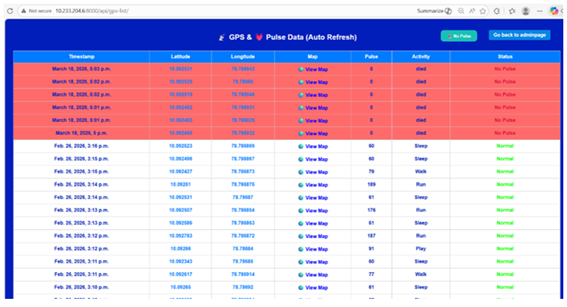
such as normal, low, high, and no pulse, as depicted in Figure 7's Django dashboard. The health condition of
the dog was mainly dependent on this categorization. The indicated "No
Pulse" warning, displayed in red colour indication, would need the
immediate attention of a rescue team and indicate some serious problems like
injury, device removal, or died.
The users track
the location of the dog exactly using Google Map to generate the "View
Map" links available in the dashboard, it’s helped to reduce the response
time.
|
Figure 7
|
|
Figure 7 Django Dashboard Showing Real-Time GPS and
Pulse Monitoring and Dog Activity |
Furthermore, the
system was also test for its robustness with the presence of noise, latency,
and high frequency of updates. It was observed that the system displayed
different "High Pulse" readings, for example, 222 and 229 BPM, which
might be an indication of stress or hyperactivity of the dog. Dog pulse low or
zero readings can be useful in determining if the dog is unconscious, sleeping,
or not responding at all. The system moves from passive monitoring to active
monitoring with the interpretation of dog behaviour. this type of method
greatly improves dog identification, veterinary services and ground-level
animal rescues. Moreover, the accuracy of the API endpoint and the robustness
of the backend database are ensured by the consistency of the log entries of
the RFID and GPS data over different periods of time, even after multiple
sessions. The data can be used for long-term observation of dog behaviour,
migration, and health patterns, apart from real-time monitoring. The two-module
system ensures that the RFID scan log function remains active even if one of
the systems fails for some time (for example, loss of GPS signal in a covered
region).
Third, the
developed system is able to effectively integrate IoT hardware components with
a machine learning model in order to automatically predict the health condition
monitoring of stray dogs based on pulse value. Once real-time pulse data is
obtained from the ESP32 module using the pulse sensor connected to it, the
developed Random Forest model is able to predict the health condition category
based on this input data.
For instance, the
data set used for training this model consists of various pulse rate data with
five classes: high-abnormal, low-abnormal, no pulse, normal, and very
high-abnormal. Once this data is loaded and reprocessed, the random forest
classifier is used for testing.
RESULT FINDINGS
The dataset was
successfully loaded, As well as model has successfully
trained without any problems, indicating that the data set is appropriate for
building a trustworthy model. Following evaluation, the model's accuracy is
0.9876, or roughly 98.7%. This demonstrates how well the model is classifying
various medical conditions based on the input.
|
Table 1 |
|
Table 1 Classification
Reports |
||||
|
Class |
Precision |
Recall |
F1-Score |
Support |
|
High-abnormal |
1 |
1 |
1 |
6 |
|
Low-abnormal |
1 |
1 |
1 |
16 |
|
No
Pulse |
0 |
0 |
0 |
1 |
|
Normal |
0.96 |
1 |
0.98 |
27 |
|
Very
High-abnormal |
1 |
1 |
1 |
31 |
The classification
model's performance evaluation using precision, recall, F1-score, and support
values for each health status class is displayed in Table 1. The classification
model performs remarkably well on the majority of classes, as the table demonstrates.
The Low-abnormal, High-abnormal, and Extremely Precision, recall, and F1-score
all receive perfect scores of 1.00 for high-abnormal classes. With zero
misclassification errors on these three classes, these values indicate that the
classification model operates consistently. Additionally, the Normal class
achieves near-perfect precision, recall, and F1-scores (0.96, 1.00, and 0.98,
respectively). These values indicate that the model is still dependable even
though there is little misclassification.
The classification
model was unable to correctly classify the No Pulse class because its
precision, recall, and F1-score are all equal to 0.00. The classification model
had trouble learning patterns for this class, as indicated by the low support
value of 1. The table demonstrates that while the classification model performs
poorly on underrepresented classes, it is generally very effective in all
classes.
It is evident from
the model's performance that it classifies the dogs' health conditions with a
high degree of accuracy. The model's overall accuracy of 0.99 indicates that it
is a very good predictor. The high weighted average values of precision, recall,
and F1-score—0.98, 0.99, and 0.98, respectively—show that all the classes,
including High-abnormal, Low-abnormal, Very High-abnormal, and Normal, were
classified with extremely high precision, recall, and F1-score. However,
because there was very little data in the No Pulse class, the model performed
poorly in terms of precision, recall, and F1-score, as shown by the macro
average values of 0.80.
Finally, the ml
model that had been trained was successfully stored for future forecasts and
integrated into the monitoring system.
The experimental
findings demonstrate how well the Random Forest classifier predicts dogs'
health based on pulse rate data. The model's high degree of accuracy—roughly
98.7%—demonstrates that the suggested system can categorize pulse rate data
into the appropriate health conditions. However, because there are fewer
samples in the dataset, "No Pulse" data has demonstrated lower
accuracy.
The foundation for
creating intelligent systems for handling stray dogs in practical settings is
greatly aided by this system prototype. Both rural and urban areas can benefit
greatly from the numerous systems that have been put in place by different urban
and rural organizations. Health sensors, roaming GPS collars, and RFID
checkpoints at food stations allow for real-time monitoring of hundreds of
stray dogs. Machine learning algorithms that forecast anomalous patterns in
location and health-related indication can also be added to this system. In
overall, this system has proven successful in combining inexpensive hardware
with a powerful software tool for real-time animal health, location, and
identification monitoring. The dynamic visualization of this data on a
web-based interface has made this system not only very helpful but also very
accessible for field workers, veterinary doctors, and rescue organization
managers. This study has validated the potential of the IoT and RFID technology
as a crucial tool for the management and welfare of stray animal populations
and immediate actions when required.
CONCLUSION
The developed web
application is a one-stop, structured platform for the welfare of stray dogs,
promoting active community engagement and effective administrative management.
The application enables users to report cases of injured, lost, or deceased dogs
by providing critical information like location, time, reporter information,
and images, which helps in taking immediate action from the concerned
authorities. Besides reporting, the application has an adoption request
feature, promoting responsible pet ownership by giving rescued dogs a permanent
and loving home. The application has a centralized dashboard for
administrators, which helps in real-time monitoring and management of reported
cases and adoption requests, improving administrative transparency and
decision-making.
The application
has features such as geolocation tagging, timestamped entries, and image
uploads, ensuring that critical information is collected accurately and helping
in prioritizing cases based on urgency. Moreover, alert systems can alert
concerned teams in case of emergencies, which helps in taking immediate action
when lives are at stake. This initiative closes the communication gap between
the community and rescue teams, thus raising the bar for the welfare of stray
animals and community engagement. The adoption of digital technology in this
field not only simplifies processes but also helps to create a culture of
compassion and civic responsibility for stray animals.
ACKNOWLEDGMENTS
None.
REFERENCES
Abdulkarim, A., Khan, M. A. K. B. G., and Aklilu, E. (2021). Stray Animal Population Control: Methods, Public Health Concern, Ethics, and Animal Welfare Issues. World's Veterinary Journal, 11(3), 319–326. https://doi.org/10.54203/scil.2021.wvj44
Corradini, F., Fedeli, A., Fornari, F., Polini, A., Re, B., and Ruschioni, L. (2023). X-IoT: A Model-Driven Approach to Support IoT Application Portability Across IoT Platforms. Computing, 105(9), 1981–2005. https://doi.org/10.1007/s00607-023-01155-z
De Donato, M. C., Corradini, F., Fornari, F., and Re, B. (2024). SAFE: An ICT Platform for Supporting Monitoring, Localization and Rescue Operations in Case of Earthquake. Internet of Things, 27, 101273. https://doi.org/10.1016/j.iot.2024.101273
Dimitrova, M. K. (2022). Assessment of the Control of the Stray Dog Population. Knowledge: International Journal, 52(3).
Frontera-Bergas, M., Vinaixa-Fernández, M., Oliver-Riera, B., Ramis-Bibiloni, J., Isern, E., and Alorda-Ladaria, B. (2025). A Multi-Sensor IoT Platform for Monitoring Medicine Storage Beyond the Hospital. Internet of Things, 101711. https://doi.org/10.1016/j.iot.2025.101711
Giraldo, D. M., Segura, S. G., Corchado, J. M., and De la Prieta, F. (2025). Bioinspired Small Language Models in Edge Systems for Bee Colony Monitoring and Control. Internet of Things, 32, 101633. Https://Doi.Org/10.1016/J.Iot.2025.101633
He, P., Klarevas-Irby, J. A., Papageorgiou, D., Christensen, C., Strauss, E. D., and Farine, D. R. (2023). A Guide to Sampling Design for GPS-Based Studies of Animal Societies. Methods in Ecology and Evolution, 14(8), 1887–1905. https://doi.org/10.1111/2041-210X.13999
Hussain, S. A., Al Bassam, N., Zayegh, A., and Al Ghawi, S. (2022). Prediction and Evaluation of Healthy and Unhealthy Status of COVID-19 Patients Using Wearable Device Prototype Data. MethodsX, 9, 101618. https://doi.org/10.1016/j.mex.2022.101618
Jena, P. K., Agarwal, S. J., Kishore, J., and Sahu, L. S. (2025). Free-Roaming Dog Versus Stray Dog: Which is Better Terminology for Rabies Control? Journal of Communicable Diseases, 57(1), 1. https://doi.org/10.24321/0019.5138.202523
Lozanovski, A., and Nedelkovski, I. (2023). Electronic Identification of Stray Domestic Animals—Barriers and Challenges. Horizons-International Scientific Journal, 1(1), 139–152. https://doi.org/10.20544/HORIZONS.1.1.23.P13
Paganelli, A. I., Velmovitsky, P. E., Miranda, P., Branco, A., Alencar, P., Cowan, D., ... Morita, P. P. (2022). A Conceptual IoT-Based Early-Warning Architecture for Remote Monitoring of COVID-19 Patients in Wards and at Home. Internet of Things, 18, 100399. https://doi.org/10.1016/j.iot.2021.100399
Pereira, E., Araújo, Í., Silva, L. F. V., Batista, M., Júnior, S., Barboza, E., ... de Araújo Nascimento, J. (2023). RFID Technology for Animal Tracking: A Survey. IEEE Journal of Radio Frequency Identification, 7, 609–620. https://doi.org/10.1109/JRFID.2023.3334952
Pratama, A. F., Kholifah, A. R., Nafiisa, B. L., Alfaris, M. F., and Sarosa, M. (2021, August). Internet of Things-Based Cat Detector System for Monitoring Stray Cats. In 2021 International Conference on ICT for Smart Society (ICISS) ( 1–4). IEEE. https://doi.org/10.1109/ICISS53185.2021.9532497
Saikrupa, P. A., Dhaarini, G., and Sanjai, R. (2024, December). Enhancing Dog Tracking Through Dynamic Geofencing and Environmental Awareness. In 2024 International Conference on IoT Based Control Networks and Intelligent Systems (ICICNIS) ( 1033–1039). IEEE. https://doi.org/10.1109/ICICNIS64247.2024.10823373
Soni, N., and Nigam, N. (2025). Recent Advances in Artificial Intelligence and Machine Learning: Trends, Challenges, and Future Directions. International Journal of Engineering Trends and Applications, 12(1), 9–12.
Todorov, T., and Stoinov, J. (2020, October). IoT-Based Animal Monitoring System. In 2020 4th International Symposium on Multidisciplinary Studies and Innovative Technologies (ISMSIT) ( 1–4). IEEE. https://doi.org/10.1109/ISMSIT50672.2020.9254522
Villalva, P., and Jordano, P. (2025). A Machine Learning Application to Camera-Traps: Robust Species Interactions Datasets for Analysis of mutualistic networks. bioRxiv. https://doi.org/10.1101/2025.03.01.640990
Witczak, D., and Szymoniak, S. (2024). Review of Monitoring and Control Systems Based on Internet of Things. Applied Sciences, 14(19), 8943. https://doi.org/10.3390/app14198943
Xavier, P. S., Joshy, J., Thayil, M. R., Nandalal, M., and Xavier, R. (2023, August). A Web Application for Enhancing Stray Dog Welfare: Identification and Virus Detection. In 2023 9th International Conference on Smart Computing and Communications (ICSCC) ( 419–423). IEEE. https://doi.org/10.1109/ICSCC59169.2023.10335055
Xu, J., and Jiang, A. (2023). Public Opinions on Stray Cats in China: Evidence from Social Media Data. Animals, 13(3), 457. https://doi.org/10.3390/ani13030457
Yaşar, F. N., Barabanshchikova, R., Taş, İ., and Yoğurucu, N. N. (2021). An IoT-Based Feed System for Stray Animals. https://doi.org/10.13140/RG.2.2.26049.58723
|
|
 This work is licensed under a: Creative Commons Attribution 4.0 International License
© ShodhAI 2026. All Rights Reserved.